Walk into any pharmacy or health store these days and you’ll see it – shelves packed with bottles promising better sleep, calmer nerves, sharper focus, stronger immunity. Most of it falls under one big category: herbal health supplements. And honestly? The interest makes sense. People are tired of quick fixes that come with a page-long list of side effects. They want something that feels a bit closer to what nature intended, not another lab-made pill.
But here’s what nobody really tells you when you start looking into this stuff – not all herbal health supplements are made the same way, and jumping in without knowing what to look for is a fast way to waste money on products that don’t do much of anything. I’ve gone through a lot of research (and honestly, a lot of trial and error with my own routine) to put together something practical. Let’s get into what these supplements actually are, how they work, which ones have real evidence behind them, and how you can tell a good product from a marketing gimmick.
Quick Summary
If you’re exploring Herbal Health Supplements, the most important thing is choosing products made with quality ingredients, transparent labeling, and responsible manufacturing. Herbal supplements may support overall wellness when used correctly, but they work best alongside a healthy lifestyle-not as a replacement for medical care. Always choose trusted brands and follow the recommended usage instructions.
Table of Contents
So, What Are Herbal Health Supplements Really?
At the most basic level, herbal health supplements are products made from plants – roots, bark, leaves, flowers, seeds – turned into capsules, powders, teas, or liquid extracts. Unlike most pharmaceutical drugs, which usually zero in on one isolated compound, herbal supplements tend to carry a whole mix of naturally occurring compounds that work together. That’s a big part of the appeal, honestly. There’s something reassuring about using a product that hasn’t been stripped down to a single synthetic molecule in a lab.
You’ve probably already heard names like turmeric, ashwagandha, ginseng, echinacea, and milk thistle floating around – maybe from a friend, a family member, or that one coworker who’s always talking about their supplement stack. Each of these plants has roots (pun intended) in traditional medicine systems like Ayurveda and Traditional Chinese Medicine, used for centuries before modern researchers ever got around to studying them.
One thing worth knowing upfront: these products aren’t regulated the same way prescription drugs are, at least not in most countries including the US. They fall under dietary supplement law, not drug law, which means companies don’t have to prove their product actually works before putting it on a shelf. That’s not meant to scare you off – it’s just why doing a little homework before buying matters so much-Herbal Health Supplements
Why Are So Many People Turning to Herbal Supplements Right Now?
There isn’t one single reason, but a few patterns keep coming up when you talk to actual users. Some people want extra immune support heading into flu season. Others are dealing with everyday stress and want something gentler than prescription anxiety meds. A lot of people are simply trying to plug nutritional gaps their regular diet doesn’t cover.
Chronic stress, bad sleep, low energy – these have basically become the default complaints of modern life, and conventional medicine doesn’t always have a satisfying answer for “I just feel tired all the time.” That’s the gap herbal health supplements often try to fill. Not as a replacement for actual medical care, but as one more tool in the toolbox.
There’s a trust element here too. A lot of people feel plant-based remedies come with fewer risks than synthetic drugs, partly because these plants have literally been used for generations without major issues. That’s not universally true – some herbs interact badly with medications – but it does reflect a real shift in mindset: less “wait until something’s wrong,” more “try to stay ahead of it.”
Social media plays a role too, for better or worse. Wellness creators post their routines constantly, and while not everything trending online has solid science behind it, it has gotten more people asking questions about what they’re actually putting into their bodies.
The Herbal Health Supplements People Actually Reach For
Let’s get specific, because vague talk about “natural wellness” “Herbal Health Supplements” doesn’t help anyone decide what to buy.
- Ashwagandha – probably the most talked-about adaptation right now. A handful of studies suggest it can help lower cortisol and ease stress or anxiety symptoms. People who take it regularly often say they feel calmer, without the drowsy, foggy feeling some anti-anxiety meds cause.
- Turmeric (curcumin) – widely used for inflammation. Research has tied curcumin to reduced joint pain and better inflammation markers, though your body doesn’t absorb it well unless it’s paired with black pepper extract (piperine).
- Echinacea – the classic cold-season go-to. Evidence here is genuinely mixed, but some research suggests it might shorten a cold if you start taking it right when symptoms hit.
- Milk thistle – mostly used for liver support. Its active compound, silymarin, has shown protective effects on liver cells across several clinical trials.
- Ginseng, specifically Panax ginseng, gets used a lot for energy and mental clarity, with some studies backing modest improvements in cognitive performance and fatigue.
- Valerian root and chamomile – go-to picks for sleep trouble, and a gentler alternative for people who don’t want to rely on prescription sleep aids.
Each of these has earned its reputation because there’s at least some real research behind it, on top of centuries of traditional use. That combination is exactly what makes herbal health supplements so appealing to try. Still – results vary a lot from person to person depending on dosage, product quality, and your own body chemistry, so keep your expectations grounded. One bottle isn’t going to transform your health overnight, and anyone telling you otherwise is selling something.
How Do These Supplements Actually Work?
It helps to understand the mechanics, even in simple terms. Plants make compounds called phytochemicals to protect themselves – things like flavonoids, alkaloids, and polyphenols that fend off pests, UV damage, or disease. When we consume these compounds, a lot of them interact with our own biology in ways that can reduce inflammation, support antioxidant activity, or influence hormones and neurotransmitters.
This is part of why herbal health supplements feel different from synthetic drugs. Instead of hitting one receptor with pinpoint precision, a single herb might carry dozens of active compounds working together – sometimes called the “entourage effect.” That can make the effects gentler and more gradual, but it also makes dosing harder to predict, which is exactly why product quality matters so much here.
It also explains why two people can take the exact same product and get pretty different results. Body weight, gut health, metabolism, even the time of day you take it – all of that plays into how noticeable the effects actually are.
How to Actually Choose Safe, Effective Herbal Health Supplements
This is the part that matters most, because good intentions alone won’t save you from a badly made product.
1. Third-party testing. Look for labs like USP, NSF International, or ConsumerLab. This confirms the label actually matches what’s in the bottle – which, surprisingly often, it doesn’t.
2. Standardized extracts. A label that says “standardized to X% active compound” tells you way more than a vague “proprietary blend” ever will.
3. Transparent sourcing. Good brands are upfront about where the herbs come from and how they’re processed. Contamination with heavy metals or pesticides is a real risk with cheaply sourced products.
4. Realistic claims. If a bottle promises to cure a disease or replace medical treatment altogether, walk away. Legitimate supplements support wellness – they don’t perform miracles.
5. Talk to someone qualified. A doctor, pharmacist, or licensed herbalist before starting anything new, especially if you’re pregnant, nursing, managing a chronic condition, or already on medication.
Are Herbal Health Supplements Actually Safe for Everyone?
Short answer: not necessarily. “Natural” doesn’t automatically mean “risk-free,” and that’s worth saying plainly. St. John’s Wort, for example, is popular for mood support but can seriously mess with birth control, antidepressants, and blood thinners. Ginkgo biloba can raise bleeding risk, which matters a lot before surgery. Even green tea extract, in high concentrated doses, has been linked to liver strain in rare cases.
That’s exactly why decent products come with clear dosage guidance, and why using them responsibly means reading labels, starting low, and actually paying attention to how your body responds. Pregnant women, people juggling multiple medications, and anyone with liver or kidney issues should be extra cautious and loop in a doctor before trying anything new.
A small tip: keep a quick note of what you’re taking and when, at least for the first few weeks. It sounds unnecessary until it isn’t – it’s genuinely the easiest way to catch a pattern, good or bad.
Herbal Supplements vs. Prescription Medication – Which Wins?
This question comes up a lot: should herbal health supplements replace prescription meds? Almost always, no – not without a doctor involved. These products work best as a complement to conventional treatment, not a swap for it.
For mild, everyday stuff – occasional stress, minor digestive discomfort, trouble winding down – herbal supplements can be a reasonable first step. But for diagnosed conditions like high blood pressure, diabetes, or depression, dropping prescribed treatment for herbal alternatives without medical guidance can be genuinely risky. Integration beats substitution, every time.
The Science Is Catching Up
The reputation of herbal health supplements has shifted a lot over the last decade. What used to get dismissed as folk remedy is now the subject of serious research at real universities and medical institutions. Curcumin and resveratrol alone have thousands of published studies looking at how they work.
That said – research quality varies. A lot. Some studies are small, short, or funded by the same companies selling the product, which introduces obvious bias. A decent rule of thumb: look for supplements backed by peer-reviewed research in reputable journals, not just glowing testimonials on a product page.
Regulators are paying more attention too. The European Medicines Agency keeps monographs on traditional herbal medicines, and in the US, the National Institutes of Health continues funding clinical trials in this space. None of that guarantees every product on the shelf actually works, but it does mean the conversation is getting more rigorous than it used to be.
Making It Part of an Actual Routine (Not Just a Fad)
The people who get the most out of these Herbal Health Supplements usually aren’t chasing overnight miracles – they’re the ones folding it into a bigger picture that already includes decent sleep, regular movement, and reasonably balanced meals. A supplement can support your system. It can’t outrun a lifestyle working against you.
Consistency matters more than people expect, too. Herbs like ashwagandha or ginseng often need several weeks of steady use before you notice much. Giving up after three days and calling herbal health supplements “useless” is one of the most common – and avoidable – mistakes people make.
Choosing Herbal Health Supplements You Can Trust
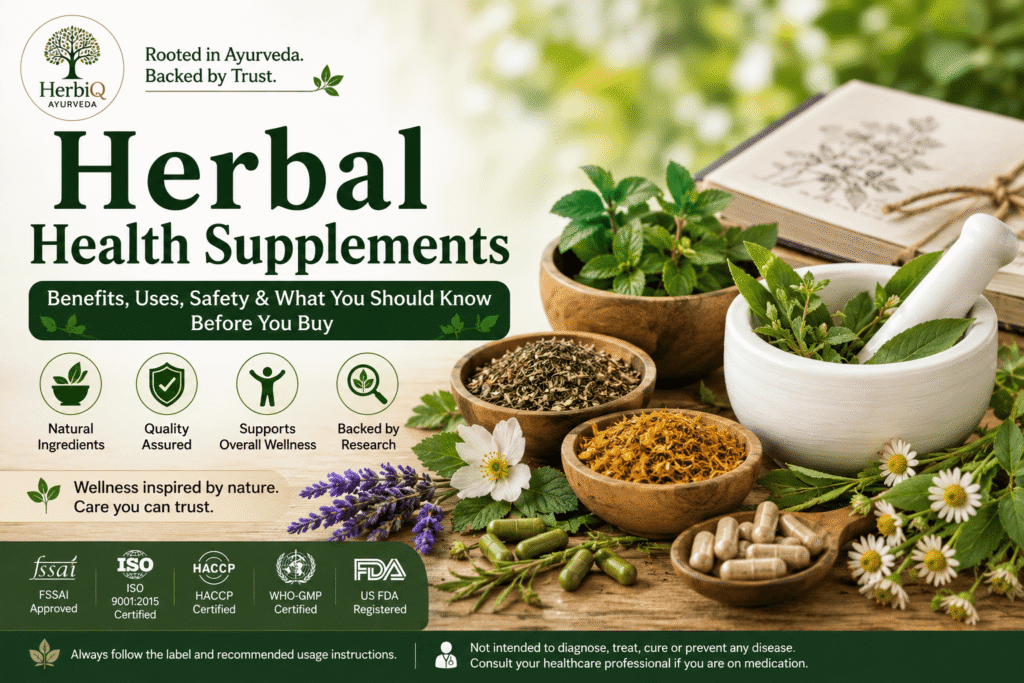
If you’re planning to try herbal health supplements, take a little extra time to research the brand-not just the product. Look for clear ingredient lists, transparent manufacturing practices, recognised quality certifications, and easy-to-understand usage instructions.
At HerbiQ, we believe informed choices lead to better wellness. That’s why our herbal wellness products are developed with carefully selected ingredients, transparent labeling, and a focus on quality standards, helping you choose supplements with greater confidence.
Herbal health supplements sit somewhere between old tradition and modern science, and that’s really the honest way to describe them. They’re not magic, they’re not snake oil – the truth is somewhere in between, depending on the herb, the product quality, and how you actually use it. Approach it with realistic expectations and a bit of research, and it can genuinely be a useful piece of your health routine.
If you’re thinking about trying one for the first time, go slow, pick a brand you trust, and keep your doctor in the loop. Your body will thank you for the extra care later.
Quick FAQs
Q: How long does it take to see results from Herbal Health Supplements?
It varies by herb and by person, but most people notice gradual changes over two to six weeks of consistent use rather than immediate effects.
Q: Can I take herbal supplements with prescription medication?
Some combinations are safe, others aren’t. Always check with a doctor or pharmacist before combining herbal remedies with prescription drugs, since interactions can be serious.
Q: Are herbal health supplements regulated by the FDA?
In the U.S., they’re regulated as dietary Herbal Health Supplements, not drugs, meaning the FDA doesn’t approve them for effectiveness before they hit the market. Third-party testing helps fill that gap.
Q: What’s the best way to start using these supplements?
Start with one product at a time, choose a trusted, third-party-tested brand, follow the recommended dosage, and give it a few weeks before deciding whether it’s working for you.
Q: Are herbal remedies safe during pregnancy?
Many are not recommended during pregnancy or breastfeeding. This is a case where professional medical guidance is essential before use.
Q: Where can I learn more about specific herbs and their uses?
Reputable resources include the National Institutes of Health’s Office of Dietary Supplements, peer-reviewed journals, and guidance from licensed naturopathic doctors or clinical herbalists.
Disclaimer: The information shared in this article is intended for educational and informational purposes only and should not be considered medical advice, diagnosis, or treatment. Herbal health supplements are designed to support overall wellness and are not a substitute for professional healthcare or prescribed medications. If you are pregnant, breastfeeding, taking medication, or managing a medical condition, consult a qualified healthcare professional before using any supplement. Always follow the product label and recommended usage instructions. Individual results may vary.
References
- Ministry of AYUSH, Government of India – https://ayush.gov.in
- World Health Organization (WHO) – Traditional, Complementary and Integrative Medicine – https://www.who.int
Name: HerbiQ Ayurveda
Address: B6, H44, Noida sector 63 Uttar Pradesh (201301)
Phone: 8796154488
Website: https://herbiq.org/